
Oils & Desi Ghee
Desi Ghee ki Pehchan: How to Check at Home
Desi ghee ki pehchan made simple: the label, seller and price checks, the home checks that give useful clues, the popular tests that mislead, and what only a lab can tell you.
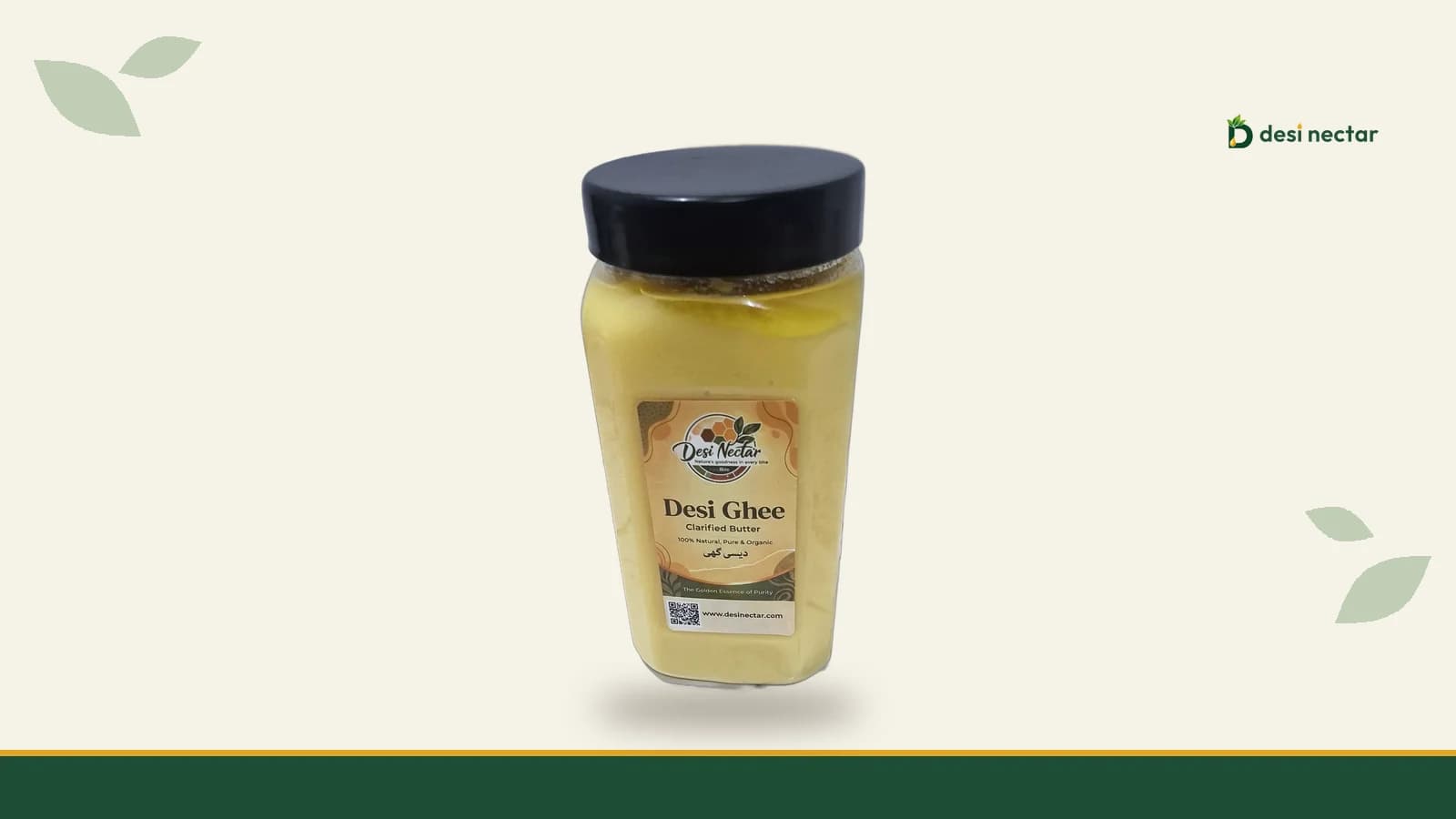
Winter is ghee season. Halwa, parathas and saag all need it, and with every new jar comes the same question: is this really desi ghee, or has something been mixed in? Desi ghee ki pehchan at home is possible up to a point. Knowing how to check desi ghee at home gives you useful clues, but no home check is proof. Only a food testing lab can confirm what is in a jar.
This guide goes test by test: how to do each check, what a good sign and a warning sign look like, and where each one stops being useful. It also covers the famous tests that mislead people, and what to do if you think your ghee is mixed.
Desi ghee ki pehchan: the short answer
- Read the label. It should say butter or milk fat, and name the animal (cow or buffalo).
- Ask the seller how the ghee is made and from which milk.
- Warm a spoonful and smell it.
- Watch how it melts and how it sets again.
- Question a very low price.
These are clues. Put together, they help you decide who to buy from. But only a food testing lab can tell you for certain what is in a jar.
What desi ghee should be, and what gets mixed in
Desi ghee is clarified butter. It is made by slowly heating butter or cream until the water cooks off and the milk solids settle, leaving only the milk fat. Nothing else should be in it.
Vanaspati, also called banaspati, is different. It is hydrogenated vegetable fat. It looks similar in the jar, which is why it is the most common thing mixed into ghee. Other common mixes are cheap vegetable oil, other animal fats, and "desi ghee flavour" added to vegetable ghee to make it smell like the real thing.
Watch for names like "cooking ghee", "vegetable ghee" or "desi ghee flavour". These are not desi ghee, even when the pack looks like it. For a full comparison, read our post on desi ghee vs banaspati.
Before you open the jar: label, seller and price checks
The most useful checks happen before you buy.
- Ingredients: look for butter, cream or milk fat, and the animal. If the list says vegetable oil, vegetable fat or vanaspati, it is not desi ghee.
- Dates and weight: a packed jar should show the weight, the packing date and a best-before date.
- Seller details: a seller name and a phone number you can actually call.
- A seller who answers: ask how the ghee is made and from which milk. A clear, simple answer is a good sign. Vague answers are not.
- Price: real desi ghee takes a lot of milk to make, so it costs much more than vanaspati. "Desi ghee" priced close to banaspati is worth asking about.
Home checks that give useful clues
1. The warm-smell check
How to do it: put a teaspoon of ghee in a small steel pan on low heat and let it warm.
- Good sign: a nutty, buttery smell that fills the kitchen.
- Warning sign: a flat, oily, waxy, soapy or chemical smell.
- Limit: added flavouring can copy the smell of desi ghee in the jar. Heat makes it easier to notice the difference, but a good smell is still not proof.
2. The melt check
How to do it: keep warming the same spoonful and watch it.
- Good sign: it melts quickly into a clear, golden liquid.
- Warning sign: heavy cloudiness, a lot of spitting and crackling, or a thick layer left at the bottom. These can mean water or milk solids were left in.
- Limit: this check shows how well the ghee was made. It does not tell you what kind of fat it is.
3. The set (fridge) check
How to do it: melt a spoonful, pour it into a small glass bowl and put it in the fridge for 20 to 30 minutes.
- Good sign: it sets fairly evenly all the way through.
- Warning sign: clear separate layers, such as an oily layer and a waxy layer. Different fats set at different speeds, so layers can be a clue to a mix.
- Limit: how fast it cools changes how it sets. Try it two or three times before you decide anything.
4. Colour
- Cow ghee is usually yellow to golden.
- Buffalo ghee is whiter. White ghee is not fake.
- Warning sign: a very bright, perfectly even yellow can mean colour was added.
- Limit: colour changes with the milk, the season and what the animals eat.
Popular tests that can mislead you
Some tests are shared everywhere, but they cannot tell desi ghee from vanaspati.
The palm test
You rub a little ghee on your palm and see if it melts. Many fats soften on a warm hand, vanaspati included. This test tells you very little.
The water test
You drop ghee into a glass of water. Every fat floats on water, vanaspati too. Websites even disagree on what "should" happen: some say real ghee floats, others say it settles. Either way, this test cannot separate desi ghee from vanaspati.
"Grainy (danedar) means real"
Danedar ghee, with small grains through it, is normal and traditional. But grain depends on how the ghee was made and cooled, and on the weather. Grain alone proves nothing either way.
The iodine test
A drop of iodine turns blue-black if starch has been added. That is all it shows. It says nothing about vanaspati or oil, and most homes do not keep iodine anyway.
The acid and sugar colour test
This is a lab method that uses a strong acid. That acid can burn skin and eyes. Do not try it at home. Even India's food regulator, which shared the method, called it only a screening test, and experts warned against home experiments (mid-day report). Leave it to labs.
What only a lab can tell you
A food testing lab can check things no kitchen can:
- whether vanaspati or another fat is present (labs use tests with names like the Baudouin test),
- whether the fat comes from milk (for example the RM value), and whether it is cow or buffalo milk fat,
- moisture and freshness.
A useful lab report names the product and batch, the lab, the date, and exactly what was tested.
Think your ghee is mixed? What to do
- Stop cooking with it.
- Keep the jar, the label and the receipt.
- Contact the seller first and tell them what you noticed.
- In Punjab, you can call the Punjab Food Authority helpline 1223 (the number shown on pfa.gop.pk).
- In other provinces, contact your provincial food authority.
Ghee in winter: firm and grainy is normal
Desi ghee sets firm in the cold and softens in summer. That is normal and is not a sign of a problem. Keep it in a cool, dry cupboard with the lid closed, and always use a dry spoon. It does not need the fridge. Our desi ghee guide explains how to store desi ghee in more detail. Honey also sets in winter, for similar reasons.
Our desi ghee, honestly
Desi Nectar desi ghee is cow ghee collected from the Bajaur valley. It has a danedar texture, which we mention as a description, not as proof. It comes in 1 kg jars and 500 g jars.
We do not have a lab report for it, so we do not make purity claims. If you want to know how it is made, ask us on WhatsApp at 0305 5928890. We are happy to explain.
You can see the rest of our oils and desi ghee range too. For frying and achar, many kitchens also use mustard oil. If you buy shilajit as well, here is how to check shilajit at home.
Order: buy Desi Nectar desi ghee on the site, or order on WhatsApp at 0305 5928890 (how to order on WhatsApp). WhatsApp orders get an order number. You can pay cash on delivery anywhere in Pakistan, or pay online to our account (details on WhatsApp). Delivery charges are shown at checkout, or ask us on WhatsApp.
More ghee reading: all oils and desi ghee posts.
Frequently Asked Questions
How can I check desi ghee at home?
Read the label, ask the seller how it is made, then do the warm-smell, melt and set checks. All of these are clues, not proof.
Desi ghee ki pehchan kaise kare?
Label dekhein, seller se poochein, thora sa garam kar ke khushboo soonghein, aur dekhein ke pighalne aur jamne ke baad kaisa lagta hai. Ye sirf ishaare hain. Pakka jawab sirf lab test deta hai.
Does the water test work?
No. Every fat floats on water, vanaspati too, so it cannot tell desi ghee from vanaspati.
Is grainy (danedar) ghee always real?
No. Grain is normal in traditionally made ghee, but it depends on how the ghee was made and cooled. It is not proof.
Is white ghee fake?
No. Buffalo ghee is naturally whiter than cow ghee.
How do I tell desi ghee from vanaspati?
Check the label and the product name first, then try the warm-smell and set checks. For certainty, you need a lab test.
Can any home test prove ghee is real?
No. Only a food testing lab can confirm what is in a jar.
Should I try the acid and sugar test?
No. It uses a dangerous acid. Leave it to labs.
Why does real desi ghee cost more than banaspati?
Desi ghee is made from butter or cream, which takes a lot of milk. Vanaspati is made from vegetable fat, which costs much less.
Is Desi Nectar ghee lab tested?
We do not have a lab report, so we do not claim it. We sell it as cow ghee from the Bajaur valley, and we will explain how it is made on WhatsApp at 0305 5928890.
#desighee#desigheekipehchan#gheecheckathome#vanaspati#danedarghee
Enjoyed this? Share it.
Send it to someone who’d find it useful.
More to read
Oils & Desi Ghee
Desi Ghee in Pakistan: Bajaur Cow Ghee, Uses, Storage and Price
How Pakistani kitchens cook with desi ghee, how to choose and store it, where our Bajaur desi ghee comes from, and the 1 kg and 500 g price.
Oils & Desi Ghee
Mustard Oil and the Best Organic Foods in Pakistan
How mustard oil (sarson ka tel) differs from refined oils, how to cook with it, and which traditional staples like desi ghee and raw honey are worth trying.