Skip to content
Free delivery on every order of Shilajit, Saffron & Sidr Honey | Cash on delivery across Pakistan Shop now
Desi Nectar
Oils & Desi Ghee

Desi Ghee vs Butter vs Banaspati: Which One Should You Cook With?

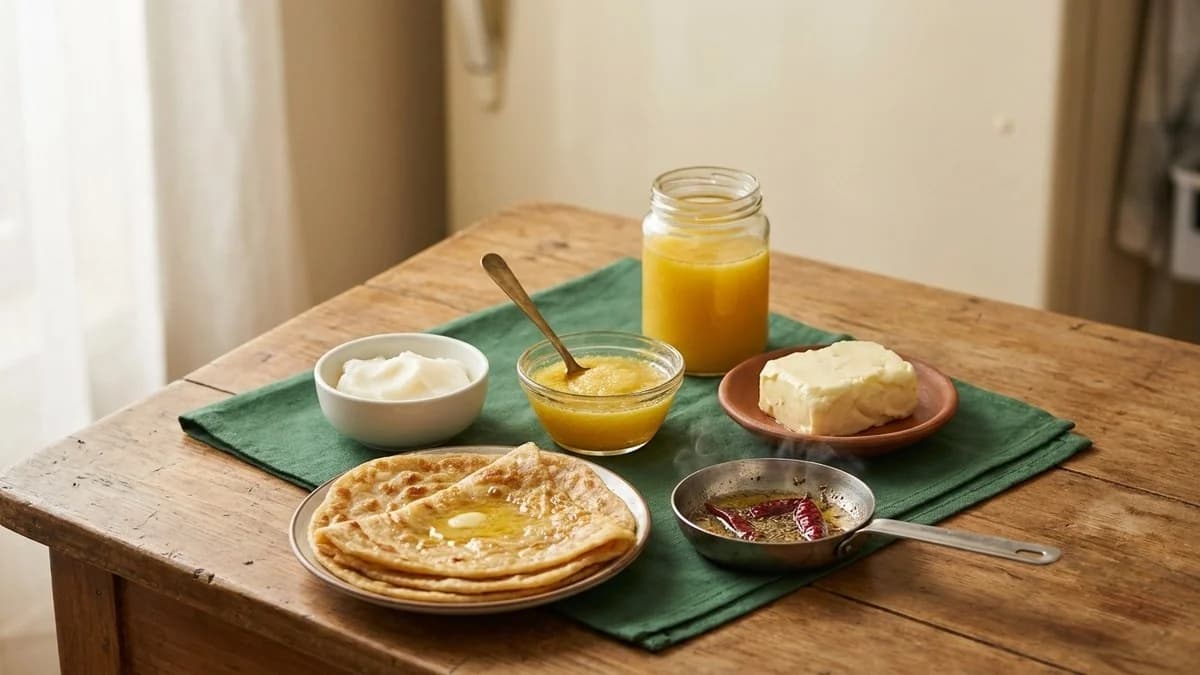
Bowls of grainy desi ghee, white butter and white cooking fat beside paratha and tarka

Walk into any Pakistani kitchen and you will find at least two of these on the shelf: a jar of desi ghee, a block of butter (makhan), a tin of banaspati, and a bottle of cooking oil. They look alike when they are cold, and many people use the words "ghee" and "butter" for all of them. But they come from different places, behave differently in a hot pan, and taste very different in your food.

This guide compares desi ghee, butter and banaspati (vanaspati ghee) as cooking fats, and shows where everyday oil fits in. It is about cooking and taste, not health. For how to choose, check and store ghee, see our full desi ghee guide.

Key points:

  • Desi ghee is butter that has been slowly cooked until the water is gone and the milk solids are strained out. It handles high heat well and has a nutty aroma.
  • Butter (makhan) still has water and milk solids in it, so it burns faster in a hot pan. It is best for spreading, baking and low heat.
  • Banaspati is made from vegetable oils that are processed so they set solid like ghee. It is a different product from desi ghee, even when it is called "ghee".
  • Cooking oil suits everyday salan and deep frying. Many cooks save desi ghee for the dishes where you can taste it.

What is the difference between desi ghee, butter and banaspati?

Desi ghee: clarified butter

Ghee starts as butter. The butter is heated gently until the water bubbles away and the milk solids sink and turn light brown. The clear golden fat is then strained off and left to set. That is why ghee is also called clarified butter. "Desi" usually means ghee made this home-style way from cow or buffalo milk.

Good cow ghee is golden to yellow, smells nutty and buttery, and often sets with a grainy (danedar) texture. Buffalo ghee is usually paler and heavier.

Butter (makhan): the starting point

Butter is churned from cream or yoghurt. White homemade makhan and yellow shop butter are both butter. Unlike ghee, butter still holds water and milk solids. Those milk solids give butter its soft, creamy taste, but they also brown and burn quickly over high heat. Butter also needs the fridge to stay fresh for long.

Banaspati (vanaspati ghee): a plant-oil fat

Banaspati, also sold as vanaspati or "vegetable ghee", is made from vegetable oils. The oils are processed so they become solid at room temperature and look like ghee. It does not come from milk, so it has no dairy aroma of its own. Some products add a "desi ghee" flavour or essence to make up for that.

So the simple answer to "desi ghee vs vanaspati ghee" is that they are not two kinds of the same thing. One is a dairy fat. The other is a processed plant-oil fat made to look like it.

How they behave in the kitchen

In a hot pan

  • Desi ghee: the milk solids have been removed, so it takes the heat of a tarka without burning quickly. Cumin, garlic and red chillies sizzle and release their aroma into it.
  • Butter: the milk solids start to brown and then burn over high heat, and the water makes it spit. Use low to medium heat, or add a little oil with it.
  • Banaspati: it handles frying heat, which is why it is common in large-batch cooking and sweet shops. It adds fat and texture, but not a dairy aroma.

Taste and aroma

Desi ghee gives a nutty, roasted-milk smell, so a single spoon flavours a whole pot of daal. Butter tastes creamy and mild, and is best where you taste it fresh, like on toast or melted over hot food. Banaspati tastes fairly neutral.

Texture when it sets

Desi ghee often sets grainy (danedar), firm in winter and soft in summer. Butter is smooth and creamy. Banaspati is usually smooth and waxy, and often whiter.

Which one to use for which dish

  • Tarka on daal and sabzi: desi ghee. It carries the aroma of the spices best.
  • Paratha: desi ghee for flaky layers and a golden finish. Butter works on a lower flame.
  • Halwa, pinni, panjiri and zarda: desi ghee. Roasting suji or flour in ghee gives the nutty smell these sweets are known for. See how ghee goes into zarda in our saffron cooking guide.
  • Toast, bun maska and baking cakes or biscuits: butter, for its creamy taste.
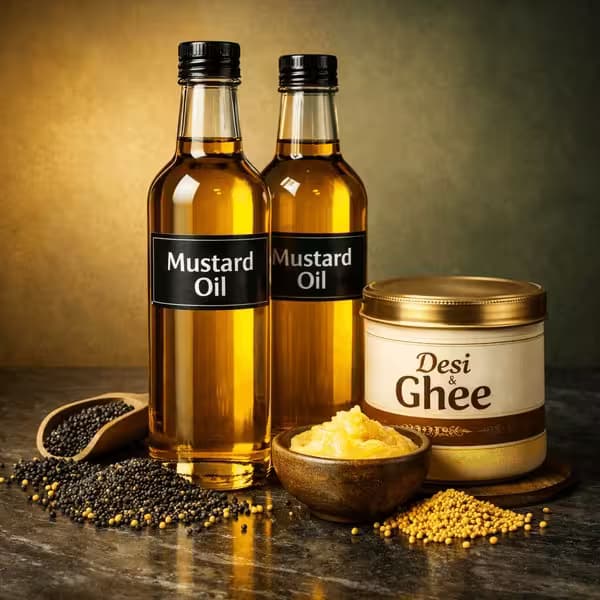
  • Everyday salan and deep frying: a cooking oil. For a strong traditional taste in achar, saag and bhuna dishes, many families use cold-pressed mustard oil (sarson ka tel). Heat it until the raw smell fades, then lower the flame.
  • Sarson ka saag and makki ki roti: cook in oil, then finish with a small spoon of desi ghee melting on top.

Desi ghee or cooking oil?

You don't have to choose one. Most Pakistani kitchens use both. Oil is cheaper per litre and has a milder taste, so it makes sense for the big daily pot and for deep frying. Desi ghee has a strong flavour, so a little goes a long way in the dishes where you notice it. Read more about mustard oil in our guide to mustard oil.

How to tell desi ghee from banaspati when you buy

  • Read the ingredients. Desi ghee should list butter, milk fat or the animal source (cow or buffalo). If vegetable oil or "vanaspati" appears, it is banaspati or a blend.
  • Look at the name carefully. "Cooking ghee", "vegetable ghee" and "desi ghee flavour" are not the same as desi ghee.
  • Warm a little. Desi ghee gives off a nutty, buttery smell. A flat or oily smell is a warning sign.
  • Question a very low price. Real dairy ghee takes a lot of butter to make. A "desi ghee" priced close to banaspati is worth asking about.
  • Ask the seller how it is made and where it comes from.

These checks are clues, not proof. Only a food testing lab can confirm exactly what is in a jar. Our desi ghee guide explains the home checks and their limits.

Our desi ghee: cow ghee from the Bajaur valley

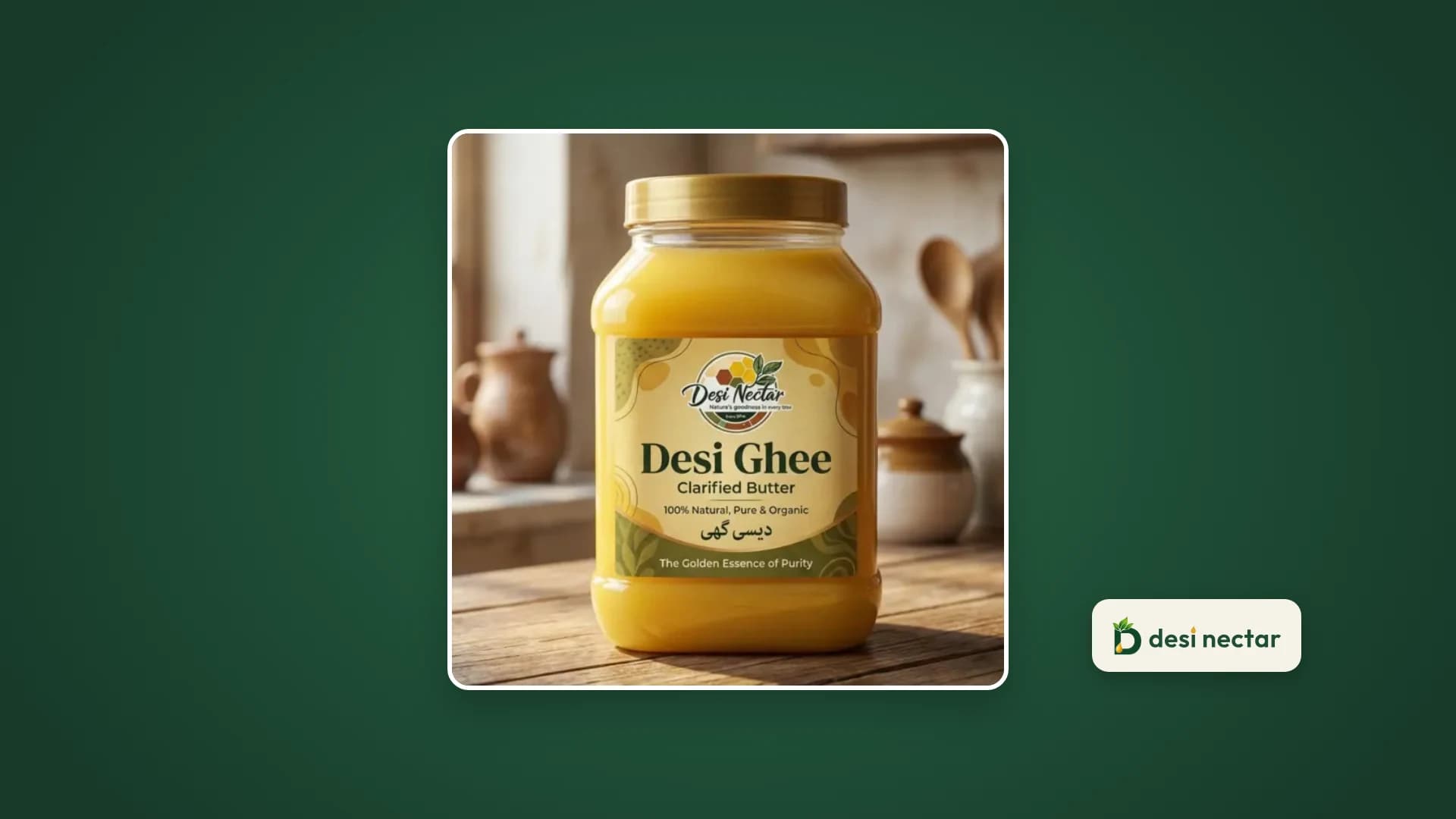
Desi Nectar's desi ghee is desi cow ghee collected from the Bajaur valley in Khyber Pakhtunkhwa. It is traditionally made (as stated on our listing), golden in colour, with a granular (danedar) texture. It is sold as cow ghee, not as banaspati or a flavoured blend. It is made in small batches, so stock is limited.

At the time of writing (Oct 2026), the 1 kg jar is Rs 3,600 and the 500 g jar is Rs 1,800. Prices can change, so check the product page for today's price. You can also browse all oils and desi ghee.

How to order:

  • On the website: add the jar to your basket and pay cash on delivery across Pakistan.
  • On WhatsApp: 0305 5928890. Send the product name, size and your delivery details. WhatsApp orders are entered by our team and get an order number. See how to order on WhatsApp.
  • Payment: cash on delivery, or online payment to our account (ask us on WhatsApp for the details).
  • Delivery charge: please check at checkout, or ask us on WhatsApp. Delivery times are on our shipping and delivery page.

Not sure which size suits your family? Message us on WhatsApp before you order.

Desi ghee, butter and banaspati are all rich fats, so keep portions moderate. Ghee is not lactose-free. This is a food product, not a medicine. If you are pregnant, breastfeeding, on medication or have a medical condition, consult your doctor about which fats suit you.

Frequently Asked Questions

What is the difference between desi ghee and butter?
Desi ghee is butter that has been slowly cooked until the water evaporates and the milk solids are strained out. Butter still has water and milk solids, so it burns faster over high heat and needs the fridge.
Is banaspati the same as desi ghee?
No. Banaspati (vanaspati) is made from vegetable oils processed to set solid like ghee. Desi ghee is made from butter. They can look alike, but the source and the taste are different.
Which is better for tarka: desi ghee or butter?
For a hot tarka, desi ghee works better because it has no milk solids left to burn. Butter is better for low heat, spreading and baking.
Can I use desi ghee instead of butter in baking?
Often yes, but the taste changes. Ghee gives a nutty flavour and has no water, so cakes and biscuits can turn out a little denser or crisper. Start with a recipe written for ghee if you can.
Should I cook everything in desi ghee instead of oil?
Most kitchens use both. Oil suits the daily pot and deep frying; desi ghee is best saved for tarka, parathas and sweets, where you can taste it. Keep portions moderate.
Where does Desi Nectar's desi ghee come from?
It is desi cow ghee collected from the Bajaur valley in Khyber Pakhtunkhwa, sold in 1 kg and 500 g jars. Ask us on WhatsApp at 0305 5928890 if you want to know more about a batch.
#desighee#desigheevsbutter#banaspatighee#vanaspatighee#cookingfats#mustardoil#Pakistanicooking
Enjoyed this? Share it.

Send it to someone who’d find it useful.
More to read

All stories →

Your basket

Loading your basket…