Fake vs. Original Shilajit in Pakistan: 3 Ways to Test Purity at Home
Three simple home tests for fake vs original shilajit in Pakistan (solubility, flame, temperature), and what home tests cannot tell you.
Real shilajit prices per gram in Pakistan in October 2026, from 10g jars to a kilogram, what resin, powder, capsules and drops actually cost you, how long 20g lasts, the warning signs of a jar that is cheap for a reason, and who should not take it.
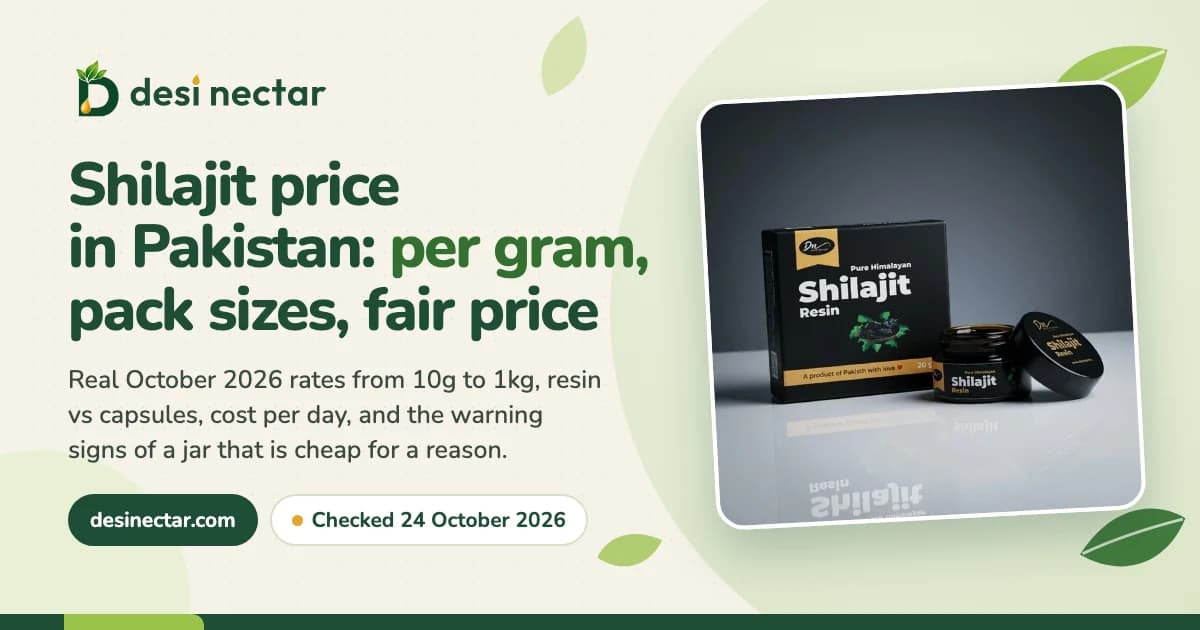
Shilajit price in Pakistan runs from about Rs 120 to Rs 230 per gram for resin sold by established online brands in October 2026, which puts a 20g jar between roughly Rs 2,300 and Rs 4,300. Bulk buyers pay Rs 60 to Rs 95 per gram for a kilogram, and social-media sellers advertise 20g for Rs 1,500 to Rs 1,700. The spread is real, and it is not random: pack size, form, cleaning, testing and marketing each move the number. This guide shows the actual rates, what each one buys you, how to turn a jar price into a cost per day, and the warning signs of a jar that is cheap for a reason.
Key takeaways - A fair price for genuine Himalayan resin from a brand with a proper label and a returns policy is about Rs 120 to Rs 160 per gram. Rs 180 to Rs 230 buys a lab report and a bigger brand. Under Rs 80 per gram at retail is a warning sign, not a bargain. - Compare per gram, not per jar. A 20g jar at Rs 2,499 is Rs 125 per gram; a 10g jar at Rs 1,500 is Rs 150 per gram. - At a pea-sized daily portion (300 to 500 mg), 20g lasts 40 to 65 days, so the real cost is about Rs 40 to Rs 60 a day. - Resin, powder, capsules and drops are not interchangeable per gram. Capsules and drops contain a diluted or extracted form, so a lower sticker price often means less shilajit. - Shilajit is a traditional food product, not a medicine. Evidence for its benefits is small and early, and some people should not take it at all.
Shilajit (salajeet, salajit, mumijo) is a dark, sticky substance that seeps from high-altitude rock in the Himalaya, Karakoram and Hindu Kush. Chemically it is mostly humic substances, with fulvic acid as the main active component along with dibenzo-alpha-pyrones and trace minerals, according to a 2012 review in the International Journal of Alzheimer's Disease. In Pakistan it is collected in Gilgit-Baltistan, Chitral and the northern valleys, then cleaned, filtered and dried into the resin you see in jars.
The price swings because the product that leaves the mountain and the product in your jar are not the same thing. Between them sit:
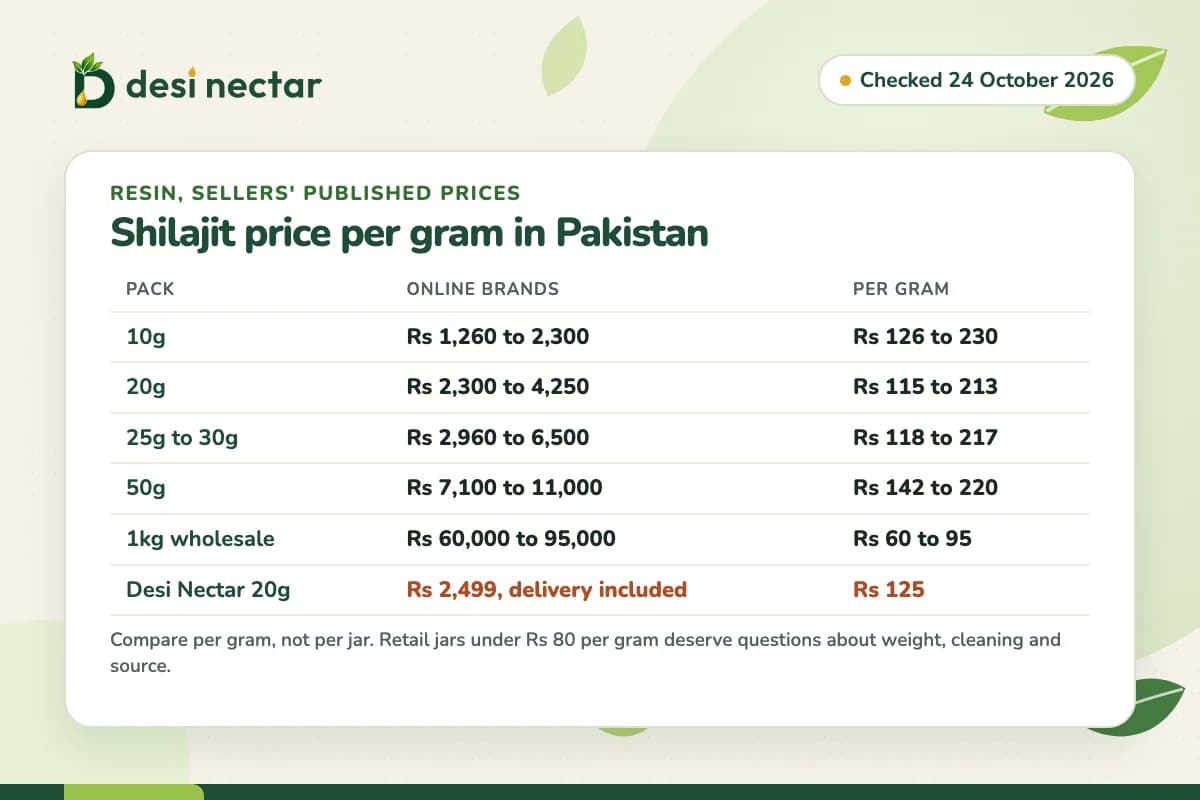
These are prices published by sellers on 24 October 2026. They change often; treat the per-gram column as the useful part.
| Pack | Typical online brand price | Per gram | Notes |
|---|---|---|---|
| 10g | Rs 1,260 to Rs 2,300 | Rs 126 to Rs 230 | Smallest jars cost the most per gram |
| 20g | Rs 2,300 to Rs 4,250 | Rs 115 to Rs 213 | The most common size; Desi Nectar's 20g is Rs 2,499 (Rs 125 per gram), delivery included |
| 25g to 30g | Rs 2,960 to Rs 6,500 | Rs 118 to Rs 217 | |
| 50g | Rs 7,100 to Rs 11,000 | Rs 142 to Rs 220 | One mass-market herbal brand lists 50g at Rs 2,350 (Rs 47 per gram); check the form and label |
| 100g | Rs 12,900 | Rs 129 | Few brands retail this size |
| 1kg (wholesale) | Rs 60,000 to Rs 95,000 | Rs 60 to Rs 95 | Semi-dried bulk resin is quoted as low as Rs 40,000 |
| Social-media sellers, 20g | Rs 1,500 to Rs 1,700 | Rs 75 to Rs 85 | Often no label, batch or returns; "1 tola for Rs 750" offers work out to about Rs 64 per gram |
Two things stand out. First, the brands with the highest per-gram price are the ones publishing laboratory reports and spending on marketing; the brands around Rs 120 to Rs 150 per gram are selling the same category of Gilgit-Baltistan resin with less overhead. Second, the gap between wholesale (Rs 60 to Rs 95) and retail (Rs 120 to Rs 230) is normal for a product that has to be jarred, packed, couriered and returned when a parcel goes wrong. A retail jar priced at or below the wholesale rate is the thing to question, not the brand charging Rs 125.
Delivery changes the comparison. Several sellers add Rs 200 to Rs 500 courier charges or ask for an advance. Desi Nectar ships shilajit free, cash on delivery, so the jar price is the delivered price.
| Form | What it is | Typical Pakistan price | Per-gram comparison |
|---|---|---|---|
| Resin | The cleaned, dried whole product; soft, dark, sticky | Rs 120 to Rs 230 per gram | The only form where price per gram means what it says |
| Powder | Resin dried hard and ground, sometimes with a carrier | Rs 20 to Rs 50 per gram (quoted) | Cheaper per gram, but you cannot tell what else is in it without a label and test |
| Capsules | Powder or extract in a shell | Rs 1,200 to Rs 3,500 per bottle | Read the milligrams per capsule; a 250 mg capsule bottle of 30 holds 7.5g of material |
| Drops | Shilajit dissolved in water or another liquid | Rs 5,600 to Rs 5,900 per bottle (one brand) | Mostly liquid by weight; compare by shilajit content, not bottle size |
An independent 2024 test by ConsumerLab of eight shilajit products found fulvic acid per serving ranged from 6.9 mg to 2,206 mg, and that resins contained much less fulvic acid than capsules made from concentrated extracts. So the forms differ in both directions: resin is the traditional whole product, extracts are more concentrated in one component. Neither is automatically "better"; what matters is that the label says what you are getting and the price reflects it.
Where and how it was collected. Higher, harder-to-reach deposits cost more to collect, and the season is short. Brands that name a district (Gilgit-Baltistan, Skardu, Chitral) are at least telling you something checkable. Our 20g resin is sold as Gilgit-Baltistan origin, as stated on the listing; we have not independently verified the collection site.
How much was lost in cleaning. Finished resin is a fraction of the raw weight. A seller offering "raw" or "semi-sun-dried" shilajit by the kilogram is selling an earlier, heavier, dirtier stage.
Whether a batch was tested. A laboratory test for lead, arsenic, cadmium and mercury is the single most useful thing a seller can show you. Cleveland Clinic's 2025 review of the evidence notes that raw shilajit has been found to contain aluminium, arsenic, cadmium, chromium, mercury, thallium and lead, and advises buying products tested by an independent laboratory. ConsumerLab's 2024 test, on the other hand, found all eight products it bought were below levels of concern. Both are true: the risk is real and product-dependent, which is why a report matters.
The jar, the spoon and the courier. A 20g jar with a measuring spoon, a box and nationwide courier delivery adds a few hundred rupees that a loose "tola" wrapped in paper does not carry.
The brand. Pakistan now has shilajit brands with lab pages, Lahore outlets and 17-minute blog posts. Their Rs 190 to Rs 230 per gram pays for that. Whether it is worth it depends on how much the report and the name matter to you.
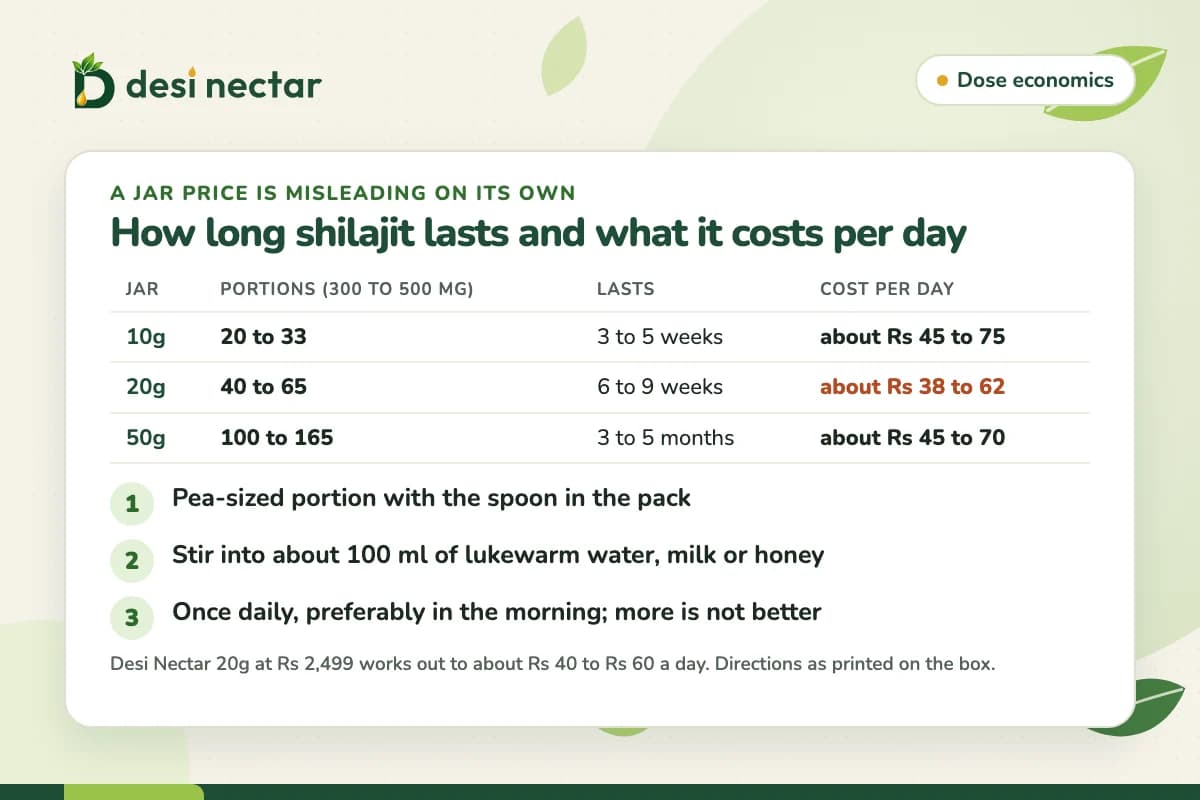
Shilajit is taken in very small amounts, so a jar price is misleading on its own.
| Jar | Portions at 300 to 500 mg | Days at one portion a day | Cost per day at Rs 2,499 per 20g |
|---|---|---|---|
| 10g | 20 to 33 | 3 to 5 weeks | about Rs 45 to Rs 75 (small jars cost more per gram) |
| 20g | 40 to 65 | 6 to 9 weeks | about Rs 38 to Rs 62 |
| 50g | 100 to 165 | 3 to 5 months | depends on brand, often Rs 45 to Rs 70 |
Cost per day is the honest comparison between a Rs 1,500 jar and a Rs 4,000 jar. It also shows why a 1kg purchase makes no sense for one household: at 500 mg a day, a kilogram is five and a half years of shilajit, and resin does not improve with age in a Pakistani summer.
Common mistake: taking a bigger lump because the jar is big. More is not better, and the people most likely to feel side effects are the ones taking the most.
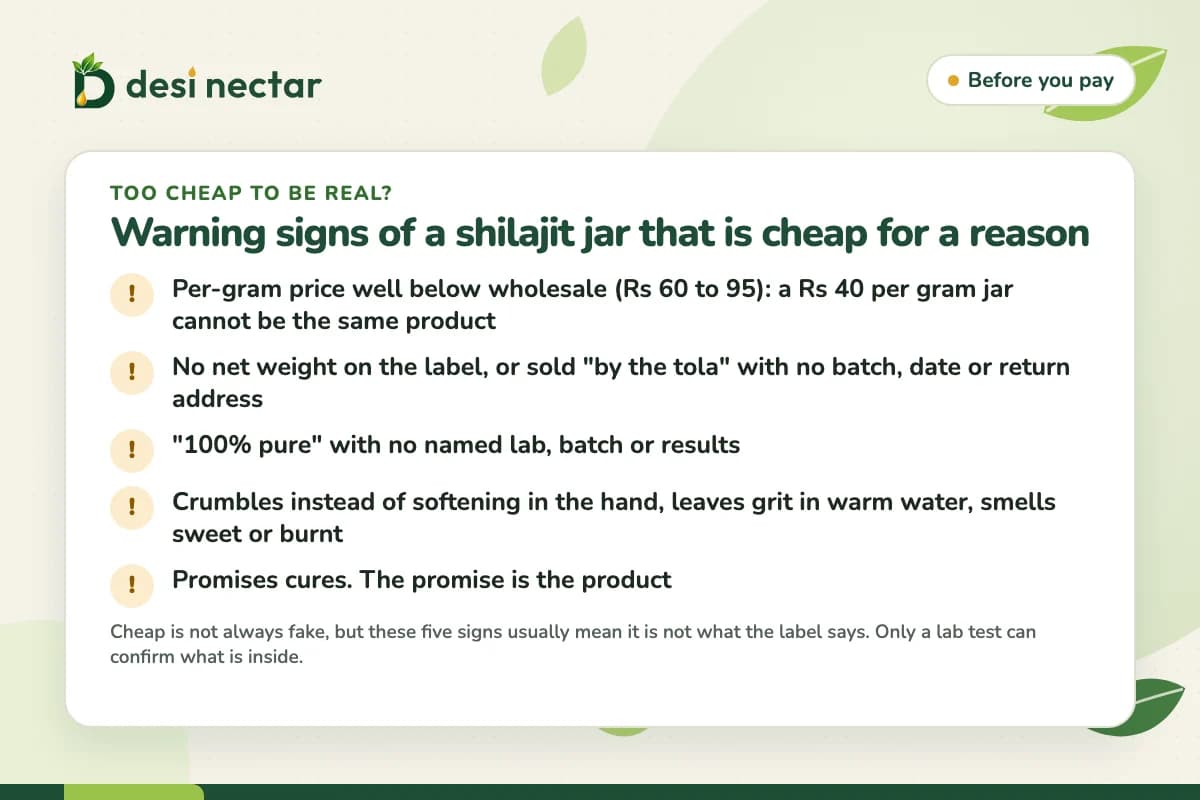
Cheap shilajit is not always fake. Sometimes it is raw, sometimes it is a smaller trader with no overhead, and sometimes it is something else entirely. These are the signs that it is the last of those:
Lab tested should mean a named laboratory, a batch number, a date, and results for at least lead, arsenic, cadmium and mercury, ideally with microbial counts and a fulvic acid figure. In Pakistan, PCSIR laboratories issue such reports. A seller who says "lab tested" without showing any of that is making a claim, not giving you evidence. Desi Nectar has not published a laboratory report for its current batch; if you want one before you buy, ask us on WhatsApp and we will tell you plainly what we have.
Gold grade is a trade term for soft, fully cleaned, high-fulvic resin as opposed to harder or less refined grades. There is no regulator in Pakistan that certifies grades, so the word carries only as much weight as the seller behind it.
Fulvic acid percentage is quoted by brands anywhere from 45% to 74%. The number depends on the testing method as much as the product, so two honest labs can give different figures for the same resin. Treat it as a comparison within one brand's batches, not between brands.
Shilajit has centuries of traditional use in South Asia as a general tonic. The modern evidence is small and early, and we would rather say that plainly than copy the claims on other price pages.
So: a traditional tonic many people take for energy and stamina, with early human studies in a few areas and no clinical proof of cures. If a page promises more than that, be careful with its price claims too.
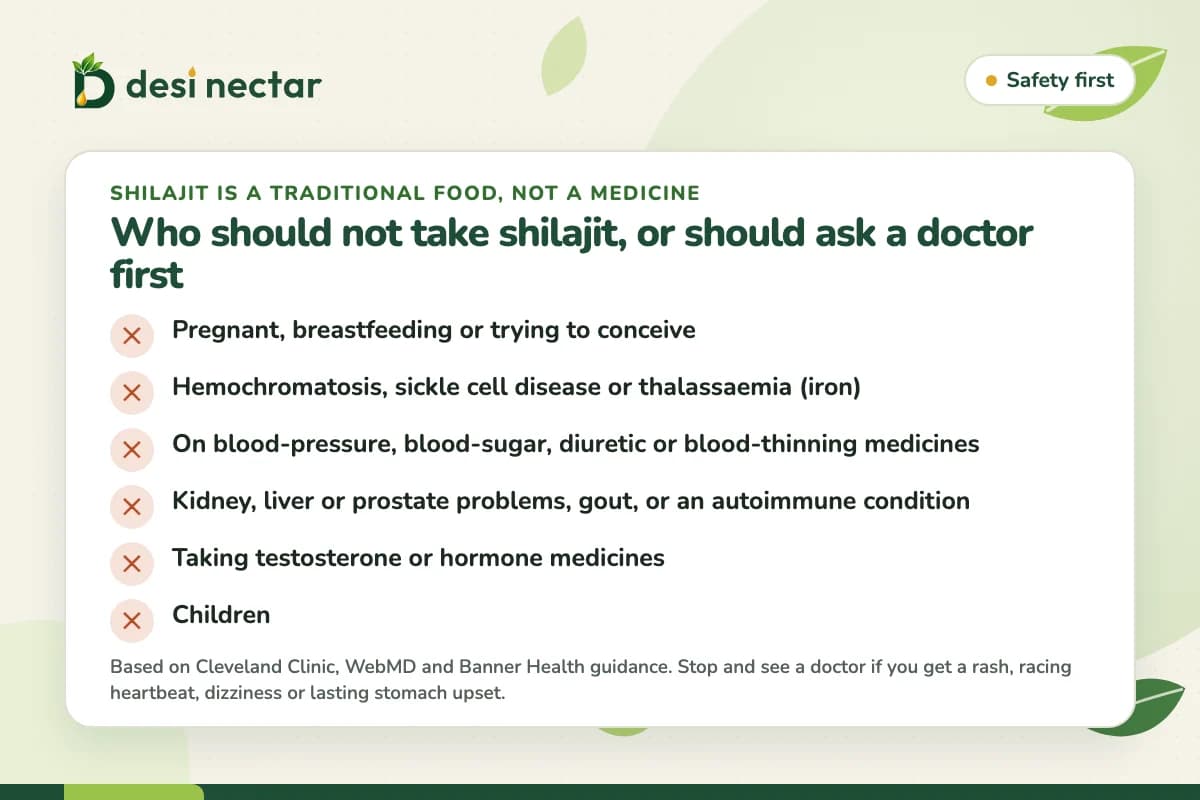
Based on Cleveland Clinic, WebMD and Banner Health guidance, do not take shilajit, or talk to a doctor first, if:
Stop and see a doctor if you get a rash, a racing heartbeat, dizziness, or persistent nausea or diarrhoea. Allergic reactions are rare but possible.
Buy from a seller who prints the net weight, gives directions on the pack, states an origin, accepts returns and answers questions before you pay. Pharmacies, established online brands and a few northern-area cooperatives do this; most Facebook and TikTok sellers do not.
Desi Nectar's Himalayan shilajit resin, 20g is Rs 2,499 in October 2026, which is Rs 125 per gram. The price includes:
It sits in our vitamins and supplements range. Many customers take it in a morning cup of whole-leaf green tea; use warm, not boiling, water. There are more shilajit guides on our blog, including the home tests.
Wholesale resin from established brands is Rs 60,000 to Rs 95,000 per kilogram in October 2026, with semi-dried bulk quoted from about Rs 40,000. A kilogram is five years' supply for one person, so for home use the per-gram price of a 20g to 50g jar is the number that matters.
About Rs 120 to Rs 160 per gram for genuine resin from a brand with a label, directions and a returns policy. Rs 180 to Rs 230 per gram usually adds a published lab report and a bigger brand. Retail jars under Rs 80 per gram deserve questions about weight, cleaning and source.
Rs 1,200 to Rs 2,300 from online brands, which is Rs 120 to Rs 230 per gram. Small jars cost more per gram, so a 20g jar is usually better value if you will use it within two months.
The one with a printed net weight, a stated origin, clear directions, a seller who takes returns and, ideally, a heavy-metal test for the batch. Within those, resin from Gilgit-Baltistan or Chitral is the traditional choice. Brand rankings on seller blogs are advertising.
At a pea-sized portion of 300 to 500 mg once a day, a 20g jar gives 40 to 65 portions, so six to nine weeks. That makes a Rs 2,499 jar about Rs 40 to Rs 60 per day.
Many women do, traditionally for energy. Cleveland Clinic notes it may raise testosterone, which in women could affect skin, periods or hair, and it is not for pregnancy or breastfeeding. Ask a doctor first if you take any regular medicine.
Work out the price per gram, check the label for weight and directions, ask what the seller can show you about the batch, and start with a small portion. If you want to go ahead, the 20g Himalayan shilajit resin is on the product page with the current price, or message us on WhatsApp at +92 305 5928890 with any question first.
This article is general information, not medical advice. Shilajit is a traditional food product, not a medicine. Desi Nectar has not published a laboratory report for its current batch. People with any medical condition, anyone taking medication, and pregnant or breastfeeding women should consult a doctor before use. Prices quoted are what sellers published on 24 October 2026 and change often.
Sources
Send it to someone who’d find it useful.
Three simple home tests for fake vs original shilajit in Pakistan (solubility, flame, temperature), and what home tests cannot tell you.
What is in an Etumax Royal Honey sachet, what the FDA and other regulators found, who should not use it, how to check a genuine 12-sachet box, and what a fair price looks like in Pakistan.
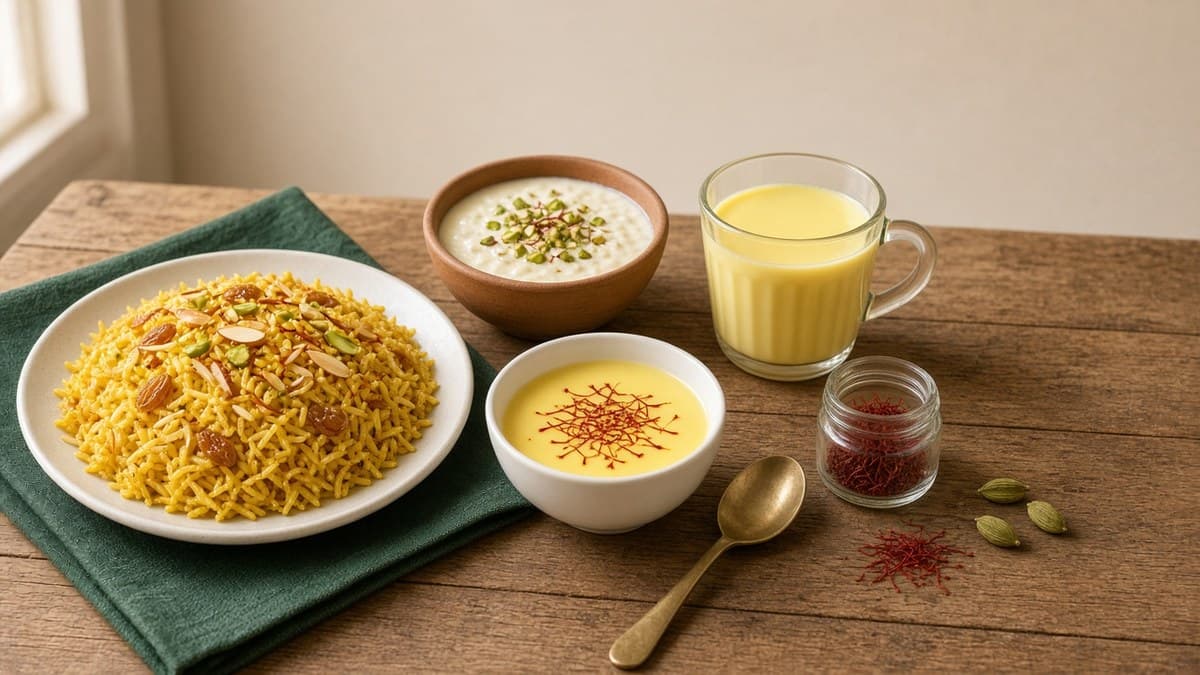
How to use saffron (zafran, kesar) in Pakistani cooking: how to soak the threads, how many to use, and when to add them to kesar doodh, kheer, zarda, biryani and Peshawari kahwa, plus common mistakes and storage tips.